Human-Centric Smart Hotels: Elevating Guest Experience with Wellness IoT
Beyond energy savings — discover how IAQ monitoring, circadian lighting, AI concierge, robot delivery, and self-regulating climate systems create memorable, wellness-focused stays.
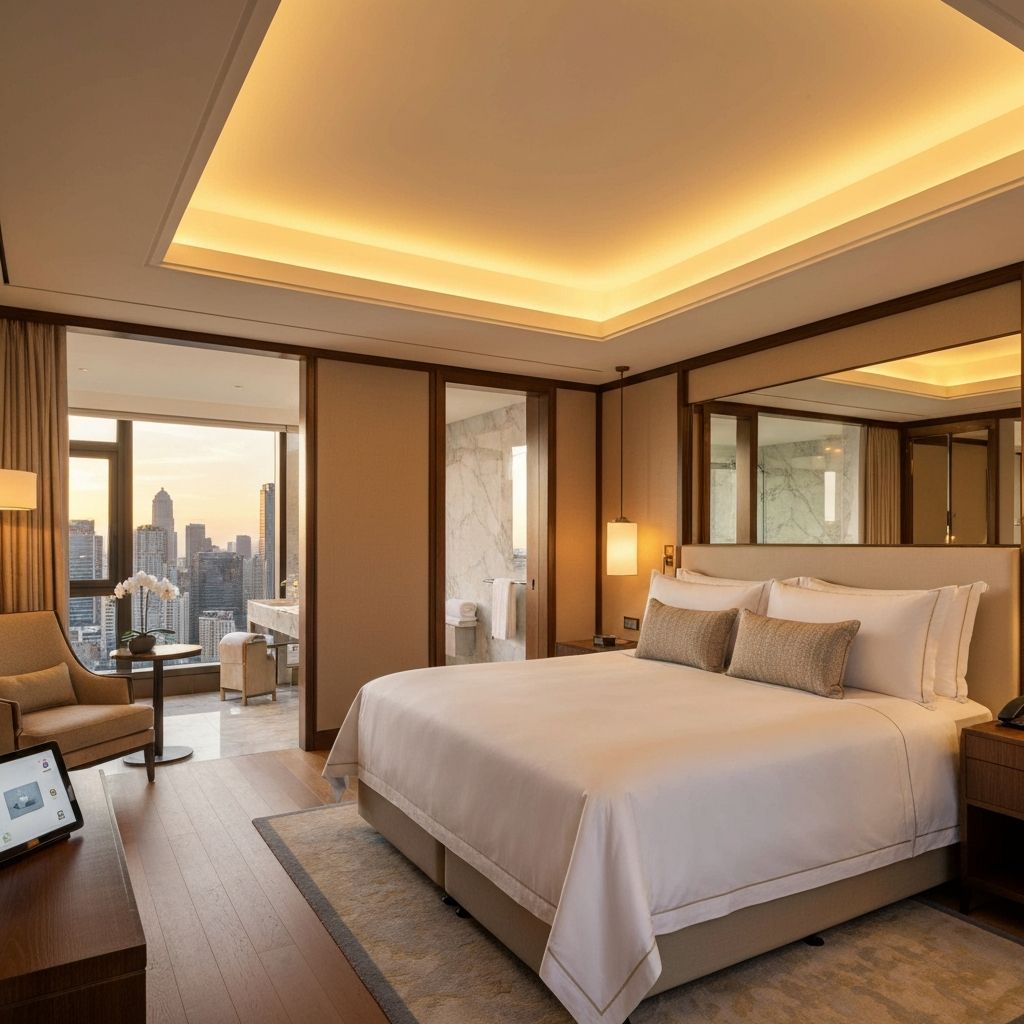
The Shift from Efficiency to Experience
For years, smart hotel technology focused primarily on operational efficiency — reducing energy costs, automating maintenance, and streamlining check-in processes. While these benefits remain important, the hospitality industry is now embracing a more profound transformation: using IoT and AI to create genuinely human-centric experiences that prioritize guest wellness and comfort.
Today's travelers don't just want a place to sleep. They want an environment that supports their well-being, respects their preferences, and anticipates their needs — all while feeling natural and unobtrusive.
IAQ Monitoring
Real-time air quality sensors track CO2, PM2.5, humidity, and VOCs — automatically adjusting ventilation to maintain optimal breathing conditions throughout the stay.
Circadian Lighting
Intelligent lighting that mimics natural sunlight patterns — providing gentle wake-up calls with warm dawn simulation, even on cloudy days, to boost mood and regulate sleep cycles.
AI Concierge
24/7 AI-powered chatbot that handles requests in multiple languages — from restaurant reservations to spa bookings, local recommendations, and room service orders.
Robot Delivery
Autonomous robots deliver food, amenities, and parcels directly to guest rooms — reducing wait times and providing contactless service for enhanced privacy and convenience.
Self-Regulating Climate
AI-driven HVAC learns guest preferences and occupancy patterns — pre-cooling rooms before arrival and maintaining personalized comfort without manual adjustments.
Personalized Profiles
Guest preferences are remembered across stays — from pillow firmness to preferred room temperature, lighting scenes, and minibar selections, creating a truly personalized experience.
Circadian Lighting: The Science of Better Sleep
One of the most impactful innovations in human-centric hotel design is circadian lighting. Our bodies rely on light cues to regulate sleep-wake cycles, hormone production, and overall well-being. Traditional hotel rooms with heavy blackout curtains and harsh artificial lighting can disrupt these natural rhythms, leaving guests feeling jet-lagged even without crossing time zones.
Smart circadian lighting systems solve this by:
- Gentle wake-up simulation — Gradually increasing warm light intensity 30 minutes before the alarm, mimicking natural sunrise
- Daylight compensation — On cloudy days, boosting light intensity to maintain circadian rhythm and combat seasonal mood changes
- Evening wind-down — Automatically transitioning to warmer, dimmer lighting after sunset to promote melatonin production
- Jet lag recovery programs — Custom lighting schedules designed to help travelers adjust to new time zones faster
Indoor Air Quality: The Invisible Differentiator
Post-pandemic travelers are acutely aware of air quality. IAQ monitoring has evolved from a nice-to-have into a key differentiator for health-conscious guests. Modern smart hotel rooms continuously track:
- CO2 levels — High CO2 causes drowsiness and headaches; smart ventilation maintains optimal levels
- PM2.5 particulate matter — Critical for guests with allergies or respiratory sensitivities
- Humidity — Maintained between 40-60% for comfort and to prevent dry skin during sleep
- VOCs (Volatile Organic Compounds) — Detecting and filtering chemicals from cleaning products or furnishings
Some hotels now display real-time IAQ dashboards in rooms, giving guests transparency and peace of mind about their breathing environment.
AI Concierge: Service Without Waiting
The modern AI concierge goes far beyond simple FAQ chatbots. Powered by large language models and integrated with hotel systems, these assistants can:
- Book spa appointments, restaurants, and activities with natural conversation
- Provide personalized local recommendations based on guest preferences
- Handle room service orders and special requests 24/7
- Answer questions in 50+ languages without human staff involvement
- Escalate complex issues to human staff when empathy is needed
The key is seamless integration — guests shouldn't feel like they're talking to a bot, but rather receiving instant, knowledgeable assistance whenever they need it.
Robot Delivery: Convenience Meets Delight
Delivery robots have moved from novelty to necessity in many hotels. Beyond the practical benefits of faster service and reduced labor costs, they offer:
- Contactless delivery — Perfect for guests who prefer privacy or are health-conscious
- 24/7 availability — Late-night room service without staffing challenges
- Guest delight — Especially popular with families, the robots create memorable moments
- Parcel handling — Secure delivery of packages and documents directly to rooms
The Business Case for Wellness Tech
Human-centric technology isn't just good for guests — it's good for business. Hotels investing in wellness IoT are seeing:
Guests are increasingly willing to pay premium rates for hotels that prioritize their well-being. The ROI isn't just in operational savings — it's in the premium positioning and loyalty that human-centric technology enables.
Implementation: Making It Seamless
The best human-centric technology is invisible technology. Guests shouldn't need to learn complex interfaces or download multiple apps. The key principles for successful implementation:
- Opt-in personalization — Let guests choose their level of automation and data sharing
- Intuitive defaults — Systems should work beautifully out of the box without configuration
- Manual overrides — Always allow guests to take control when they prefer
- Staff training — Human staff should understand and be able to explain all technology to guests
Ready to Transform Your Guest Experience?
Cereb's hospitality platform integrates IAQ monitoring, circadian lighting, AI concierge, and more into a unified system that elevates guest wellness while simplifying operations.
Schedule a Demo